
Research Today. Possibilities Tomorrow.
Explore the Science of Peptides
Small Molecules. Big Possibilities.
Peptides are rapidly becoming one of the most fascinating areas of modern biological research. From cellular communication and metabolic signaling to tissue regeneration, neurological pathways, and the science of aging, researchers are exploring how these remarkable molecules interact with the body’s complex biological systems.
At Peptide Source, we’re passionate about advancing access to peptide research materials and scientific education.
Our collection features individual research peptides and carefully formulated multi-peptide blends, giving qualified researchers access to compounds for investigating specific molecular pathways and biological mechanisms.
Whether you’re exploring mitochondrial signaling, cellular repair mechanisms, immune pathways, or emerging longevity science, Peptide Source is your destination for discovering the evolving world of peptide research.
Research-use products are intended exclusively for laboratory research and are not for human or veterinary use.
What Are Peptides, and Why Are They Generating So Much Interest?
Peptides are short chains of amino acids, the same building blocks that make up proteins. Many naturally occurring peptides function as signaling molecules, helping cells communicate and regulate biological processes.
Scientists are studying peptides because of their involvement in complex pathways associated with metabolism, tissue remodeling, immune signaling, neurological activity, and cellular aging.
Unlike larger proteins, some peptides have relatively simple molecular structures that allow researchers to investigate specific biological interactions.
Their potential scientific applications have attracted increasing attention across biotechnology, pharmacology, molecular biology, and longevity research.
Areas of Active Peptide Research
Research involving peptides continues to expand across several fascinating fields.

Cellular Repair & Tissue Regeneration
Scientists are investigating peptides such as BPC-157 and GHK-Cu for their involvement in tissue remodeling, cellular migration, collagen-related pathways, and wound-healing mechanisms.
Much of the available research involving BPC-157 remains preclinical, and these findings have not established its safety or effectiveness for human treatment.

Metabolism & Mitochondrial Function
Mitochondria are essential to cellular energy production and metabolic regulation.
Peptides such as MOTS-c are being investigated for their involvement in mitochondrial signaling, cellular energy regulation, and metabolic responses to physiological stress.
Researchers are exploring how these pathways may contribute to a better understanding of metabolic biology and cellular function.

Immune System Signaling
The immune system relies on sophisticated communication between cells, receptors, and signaling molecules.
Thymosin Alpha-1 and other peptides have been investigated for their interactions with immune cells, immune signaling pathways, and biological responses.
Researchers are exploring how Research findings vary significantly by compound, experimental model, and clinical setting.

Cognitive Function & Neurological Research
The brain depends on complex molecular signaling networks that influence neurological activity.
Peptides such as Semax and Selank have been investigated for potential interactions with neurochemical pathways associated with cognition, stress responses, and neurological function.
Additional rigorous research is needed to establish the clinical relevance of many reported findings.

Inflammation & Gut Biology
Scientists continue to investigate how certain peptides interact with inflammatory signaling pathways and intestinal barrier biology.
KPV and other experimental peptides have been studied in laboratory models involving inflammatory responses, cellular signaling, and gastrointestinal biology.
These investigations are contributing to our understanding of complex biological mechanisms, but they do not establish proven clinical benefits.

Cellular Aging & Longevity Science
One of the most exciting areas of peptide research involves understanding the biological mechanisms associated with aging.
Scientists are investigating how peptide-related signaling pathways interact with cellular stress responses, mitochondrial activity, tissue remodeling, and age-related biological changes.
Although longevity research continues to evolve, experimental findings should not be interpreted as proof that research peptides extend human lifespan or prevent age-related disease.
Discover Our Peptide Research Collection
At Peptide Source, we recognize that different research objectives require different approaches.
That’s why our catalog is organized into two primary categories.
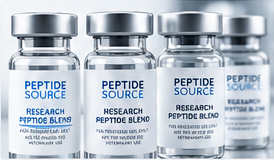
Strategic Peptide Blends
Multiple Compounds. Expanded Research Possibilities.
Peptide blends combine two or more compounds into a single research formulation.
Scientists may study combinations to investigate interactions between molecular pathways, receptor activity, or cellular responses.
Our peptide blend collection provides access to multi-compound formulations with clearly identified ingredients and available product specifications.
The presence of multiple peptides in a blend does not necessarily establish synergy, improved performance, or safety.
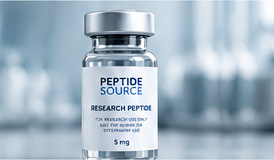
Single Research Peptides
Focused Compounds. Targeted Scientific Investigation.
Individual research peptides allow scientists to investigate the molecular characteristics and biological interactions of a specific compound.
Our single-peptide collection features compounds studied across a variety of scientific disciplines, including molecular biology, metabolic research, cellular signaling, and peptide chemistry.
Each product listing is designed to provide relevant compound information and available documentation.
Why Choose Peptide Source?

A Research-Focused Approach
We believe access to scientific information is essential for responsible research.
Peptide Source is dedicated to providing educational resources and clearly presented information about research peptide compounds.

Individual Peptides & Specialized Blends
Our catalog brings individual compounds and multi-peptide research formulations together in one convenient online destination.

Transparency & Product Information
We believe researchers should have access to clear ingredient identification, product specifications, and available analytical documentation.
Where available, product pages include relevant information about compound identity, concentration, batch identification, and testing.

Education Beyond the Product
Peptide science is constantly evolving.
Our educational resources explore the research behind peptide structures, cellular signaling pathways, emerging biotechnology, and the differences between investigational compounds and approved medications.

Supporting Scientific Discovery
Our mission is to make peptide research information and appropriate laboratory materials more accessible to qualified researchers and scientific organizations.
Frequently Asked Questions About Peptides
What are peptides, and how do they work?
Peptides are short chains of amino acids. Many naturally occurring peptides participate in cellular signaling, interacting with receptors and other molecular systems to influence biological processes.
Their specific mechanisms vary depending on their amino acid sequence, structure, and biological environment.
What are peptides being studied for?
Researchers are investigating peptides across numerous scientific fields, including cellular repair mechanisms, metabolic signaling, mitochondrial biology, immune interactions, neurological pathways, inflammatory responses, and cellular aging.
The amount and quality of scientific evidence differ considerably between compounds.
What is the difference between peptide blends and single peptides?
Single peptides contain one identified peptide compound, while blends combine multiple compounds.
Individual compounds may be studied for specific molecular interactions, while blends may be investigated for interactions between their components.
Are all peptides FDA-approved?
No. Some peptide-based medications are FDA-approved for specific medical conditions, but many research compounds are not.
Approval of a particular medication does not establish that a research-grade version of its active ingredient is approved, safe, or appropriate for human use.
Are research peptides safe for human use?
Products designated for research use only have not necessarily undergone the clinical testing required to establish safety and effectiveness for human administration.
They are not intended for human or veterinary use.
What makes peptide research important?
Peptide research helps scientists better understand biological signaling, receptor interactions, cellular behavior, and molecular pathways.
These investigations may contribute to future scientific discoveries and drug-development research.
Can peptide research lead to new medical treatments?
Yes. Peptide science has contributed to the development of approved medications, and ongoing research may identify additional therapeutic candidates.
However, early laboratory findings do not guarantee that a compound will become a safe or effective medical treatment.
Research Today.
Possibilities Tomorrow.
At Peptide Source, we believe scientific discovery begins with curiosity, quality information, and a commitment to understanding the complex mechanisms that shape biological life.
From cellular communication and mitochondrial research to the emerging science of longevity, peptides continue to open new avenues for scientific investigation.
Explore our research peptide collection and discover the science behind these fascinating molecules.
Important Legal & Research-Use Disclaimer
FOR RESEARCH USE ONLY — NOT FOR HUMAN OR VETERINARY USE
Products designated for research use only are intended exclusively for legitimate laboratory research conducted by appropriately qualified individuals or institutions.
These products are not intended for human or animal consumption, injection, implantation, topical application, self-experimentation, clinical administration, or use in the preparation of products for human or veterinary administration.
Research-use products are not intended to diagnose, treat, cure, mitigate, or prevent any disease, illness, or medical condition.
Unless expressly identified otherwise, research-use products have not been approved by the U.S. Food and Drug Administration (FDA) for human or veterinary use. Their safety and effectiveness for clinical applications have not been established.
All descriptions of biological mechanisms, cellular pathways, metabolism, immune signaling, tissue repair, neurological function, and aging are presented solely as discussions of scientific research. They do not constitute claims of therapeutic effectiveness or recommendations for personal use.
Content provided on this website is for scientific and educational purposes only and does not constitute medical advice, prescribing guidance, or instructions for human administration.
Customers are responsible for complying with applicable federal, state, and local laws, institutional policies, and laboratory safety requirements.
Peptide Source reserves the right to refuse transactions that do not satisfy applicable legal and compliance requirements.
Research-use labeling does not independently establish that a product is legally eligible for sale or exempt from FDA regulation.
Individual research findings are not guarantees of product quality, safety, or performance.
© 2026 Peptide Source. All rights Reserved.